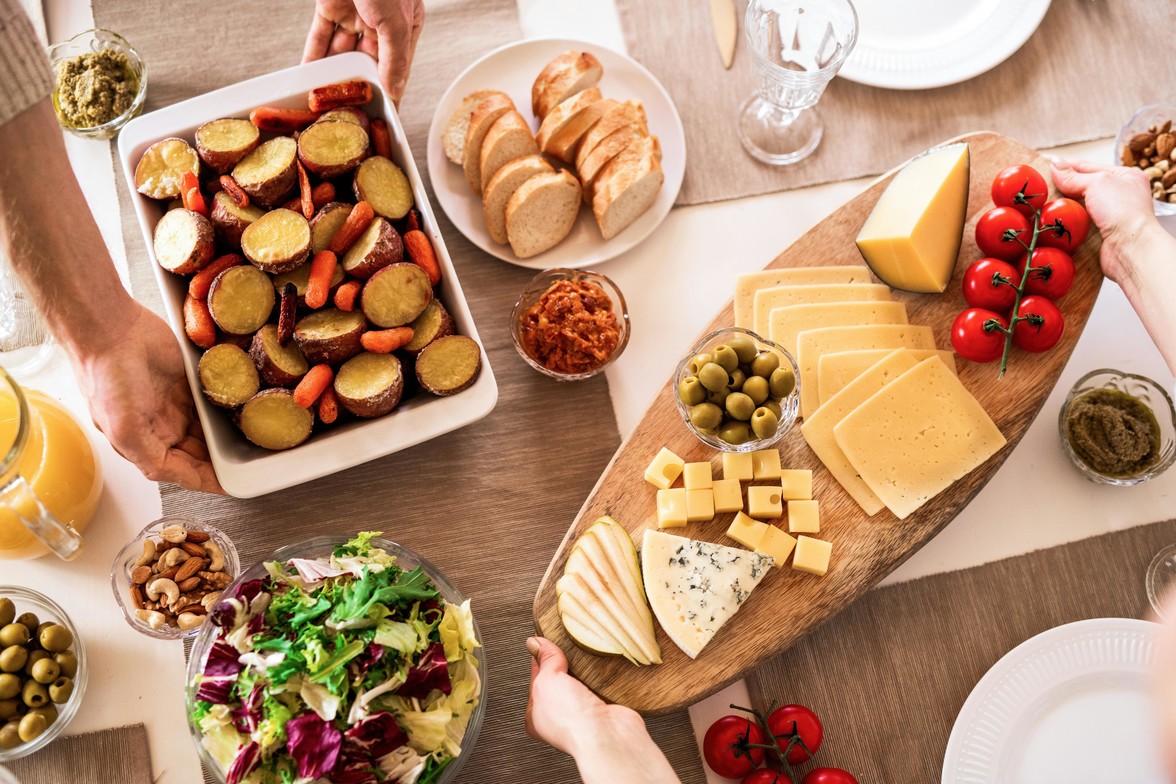
A healthy relationship with food is built on balance, trust, and respect for your body. It involves connecting with hunger and fullness cues, honoring cravings without judgment, and understanding how emotions, culture, and daily life shape eating. Disordered eating can develop as a strategy to manage emotions or cope with stress, as a response to societal pressures such as social media, diet culture, and weight stigma, or from individual factors like trauma, attachment experiences, and nervous system responses.
Eating behaviors exist along a spectrum and can disrupt our relationship with food without meeting the criteria for a clinical eating disorder. These may include restrictive eating, emotional eating, binge eating, compulsive overeating, or excessive focus on calories, weight, or body shape, guilt, shame or control. Importantly, these patterns are not a reflection of strength, weakness, or willpower—they often emerge as adaptive responses to a combination of emotional, interpersonal, genetic, biological, cultural, and environmental influences.
By recognizing and addressing these patterns, we can support healthier, more adaptive relationships with food that focus on nourishment, enjoyment, and overall well-being. This approach emphasizes whole-person health, integrating physical, mental, and social well-being. This work involves reconnecting with the body, attention to internal signals, and developing flexibility around eating that feels sustainable and satisfying. It also includes exploring underlying mechanisms influencing eating behaviors, and learning strategies to respond to these influences. This approach emphasizes whole-person health, attending to physical nutrition, mental health, emotional experiences and social interactions. Over time, previous patterns can shift into habits that support a relationship with food that feels embodied, empowered, and adaptable supporting health and a sense of ease in daily life.
(Balasundaram & Santhanam, 2023; Dougherty, Bottera, Haedt-Matt, & Wildes, 2023).
.jpg)

