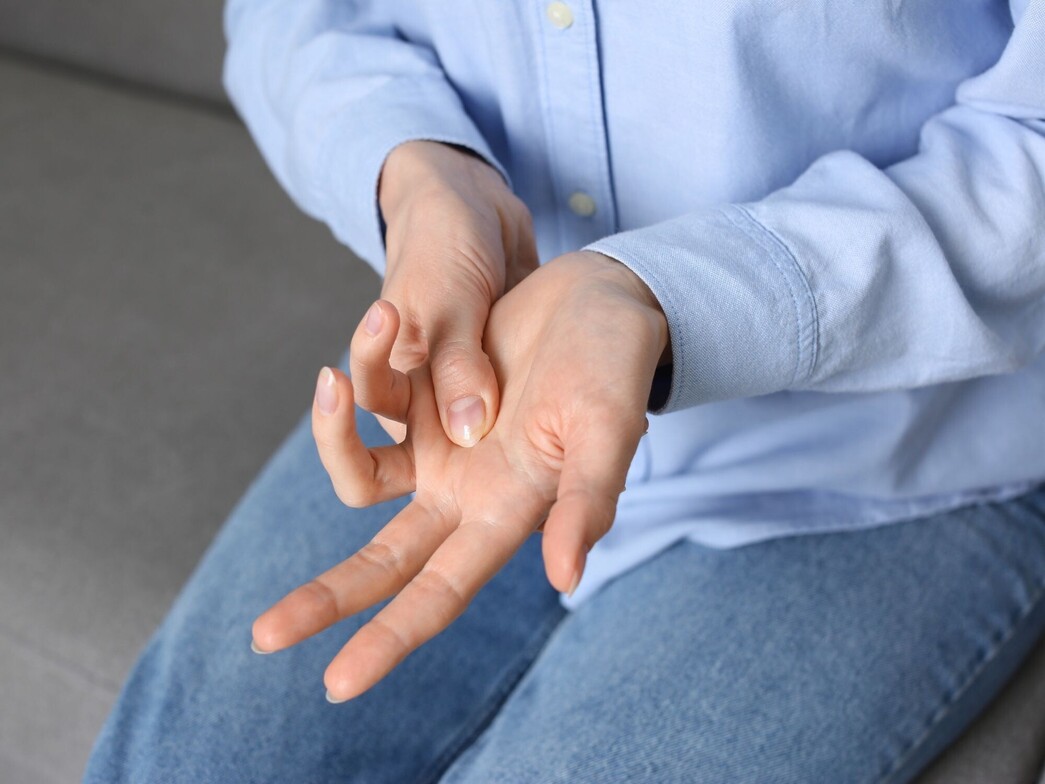
“Motion is lotion” is the guiding idea behind most trigger finger treatment, but before you get to treatment, it helps to know what you're actually dealing with.
A finger that clicks now and then usually isn't cause for concern, but a finger that catches, locks, or needs your other hand to straighten it out is a different story. Understanding trigger finger causes and treatment options, and knowing where normal clicking ends and something more significant begins, helps you figure out which one you're dealing with.
At Momentum Health in Kelowna, hand and finger complaints like this come up often, and getting ahead of it early tends to make treatment simpler.
What Is Trigger Finger, Really?
Trigger finger, medically known as stenosing tenosynovitis, happens at the base of your finger where a flexor tendon passes through a tunnel-like structure, which normally lets the tendon glide smoothly as you bend and straighten your finger. With trigger finger, the tendon develops a small area of thickening, sometimes described as a nodule, while the tendon itself can also thicken.
The result is a mismatch in size: the thickened part of the tendon doesn't pass through the tunnel structure as smoothly anymore, so it catches, and if it catches enough, your finger locks in a bent position until you or someone else pries it straight. It's worth being precise about the mechanism here, since this isn't a true muscle spasm or a nerve issue. It's a mechanical, structural change in the tendon and its pulley that changes how the two glide against each other.
What Actually Causes the Catching or Locking Feeling
Repetitive gripping and forceful hand use are the most consistently identified contributors, since repeated friction at the base of the finger is thought to drive the tendon thickening that starts the whole process. It shows up more often in people in their forties through sixties, and more frequently in women than men, though the exact reasons for that pattern aren't fully settled. A few underlying conditions raise your risk meaningfully, particularly diabetes and rheumatoid arthritis, both of which are associated with changes in connective tissue that make tendons more prone to this kind of thickening. None of this means you did something wrong to cause it. It usually reflects a combination of repetitive use and your individual tissue's response to that use, and it's genuinely common rather than rare.
Crepitus vs. Trigger Finger: What's Normal and What's Not
Not every click, pop, or crack in your fingers is a problem, and it's worth separating out ordinary joint sounds from something that needs attention. Crepitus, the general term for joint popping or cracking, is extremely common and usually harmless, often caused by gas bubbles shifting in the fluid that lubricates your joints, or a tendon briefly snapping over a bony surface as you move. On its own, painless clicking that comes and goes with normal movement, without any catching or locking, is not something to worry about.
Trigger finger looks and feels different. Instead of a quick, painless pop, you'll typically notice a distinct catching sensation as you bend or straighten the finger, sometimes with an audible or palpable snap, and often a tender bump right at the base of the finger in your palm. As it progresses, the finger may lock in a bent position, requiring gentle force from your other hand to straighten it out. That combination, catching plus a tender nodule, plus progressively worsening locking, is the pattern that distinguishes trigger finger from ordinary joint noise.
Early Signs Worth Paying Attention To
Stiffness in a finger that's most noticeable first thing in the morning and eases somewhat through the dayA tender, pea-sized bump at the base of the affected finger, right where it meets your palmA catching or snapping sensation partway through bending or straightening the fingerMild soreness at the base of the finger after gripping activities
When Clicking or Locking Needs Treatment
Occasional stiffness that resolves on its own within a few minutes usually doesn't need urgent attention, but a few signs suggest it's time to get it assessed rather than waiting it out. If your finger is actually locking, especially if you need to use your other hand to straighten it, if the catching is becoming more frequent or more difficult to release, or if the tender nodule at the base of your finger is becoming more pronounced, those are reasonable signs to have it looked at. Trigger finger tends to be a progressive condition in its early-to-moderate stages, so earlier treatment generally means a wider range of effective, more conservative options.
Treatment That Actually Helps: Tendon Glides and Hand Mobility
Exercise-based treatment focuses on restoring smooth, full-range gliding of the tendon through the pulley rather than trying to force the nodule away.
- Tendon glides move the finger through a specific sequence of positions, straight, hook, fist, and straight fist, which takes the flexor tendon through its full excursion and helps maintain smooth gliding through the pulley system.
- Wrist and hand mobility exercises, including gentle wrist flexion and extension and finger spreading, support overall hand function and reduce compensatory strain from other joints working around a stiff finger.
- Activity modification, particularly reducing sustained, forceful gripping during flare-ups, gives the irritated area a chance to settle rather than being repeatedly aggravated.
These exercises tend to work best in mild-to-moderate cases, and consistency matters more than intensity. A common recommendation for patients is to perform several short sessions throughout the day rather than one long session.
When and How Splinting Helps
Splinting is most useful in the earlier stages of trigger finger, typically involving a small splint that holds the middle knuckle, the MCP joint, in a slightly extended position, most often worn at night.
The idea is to rest the tendon and pulley in a position that reduces friction during the hours you're not consciously controlling your hand, while still allowing you to use your hand normally during the day. Splinting is generally tried for several weeks at a stretch, and it tends to be most effective before a finger has progressed to frequent, fixed locking. It isn't the right tool for every stage of trigger finger, and your physiotherapist can help determine whether it fits your specific presentation or whether your finger has progressed to needing a different approach.
When to See a Physiotherapist
If you're noticing the early signs described here, catching, a tender nodule, or morning stiffness that's sticking around, that's a good time to have it assessed rather than waiting for it to worsen. Early-stage trigger finger tends to respond well to the conservative approach described above, while more advanced, persistently locking fingers sometimes need additional medical management. Either way, getting an accurate read on what stage you're at is the most useful first step.
Get Your Hands Moving Freely Again
A clicking or locking finger is worth paying attention to, but it's also very manageable, especially when it's caught early. At Momentum Health, our team can assess what's actually happening in your finger and build a treatment plan around tendon gliding, mobility, and splinting where appropriate, tailored to your specific stage and hand use. Reach out to book an assessment and get ahead of it before it progresses further.